
Skyeng Vocabulary Service
Skyeng is one of Eastern Europe's top three EdTech companies, with a language learning ecosystem serving 120K+ monthly active users. Its vocabulary service helps students collect and retain new words.
I rebuilt an English vocabulary service from scratch for iOS, Android, and web. The new version increased daily retention by 8 pp and time spent by 14%.
Problem
Over time, the service grew outdated. Weak mechanics and legacy constraints were killing engagement.
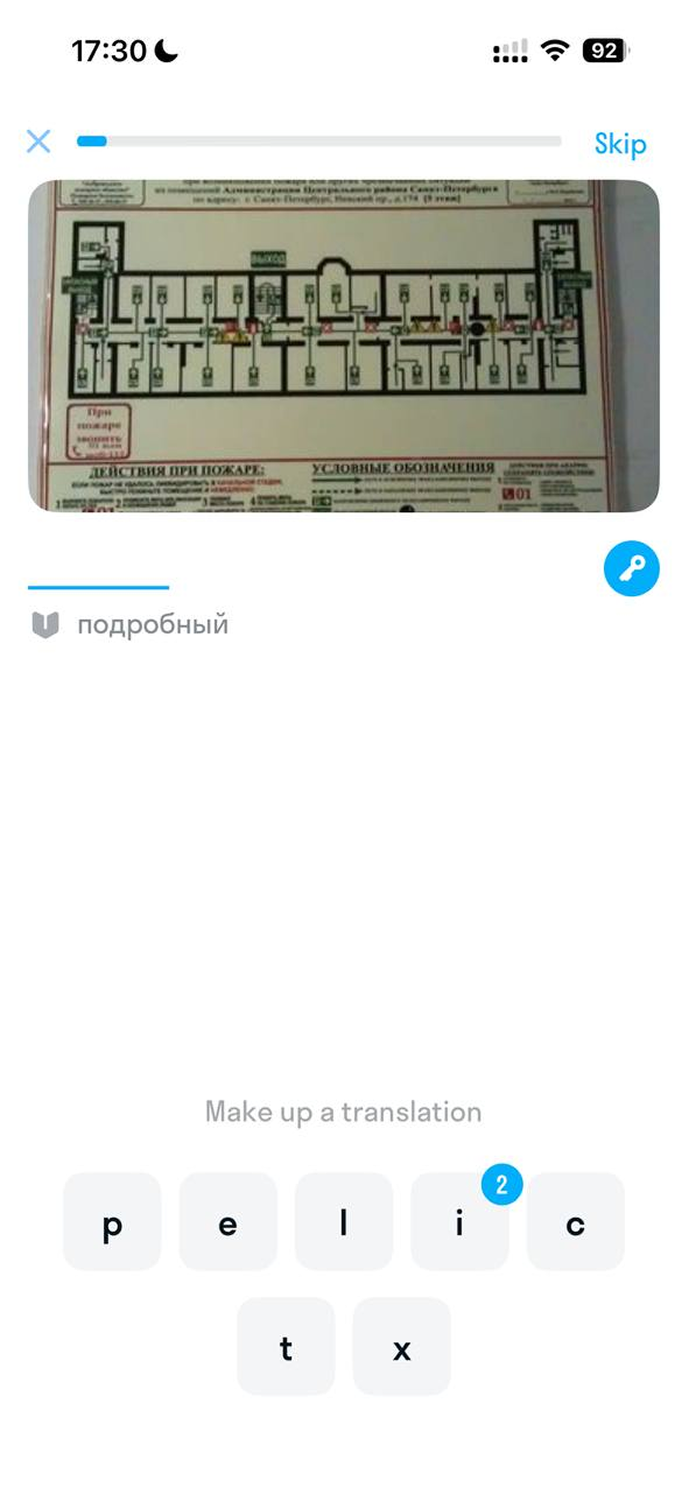
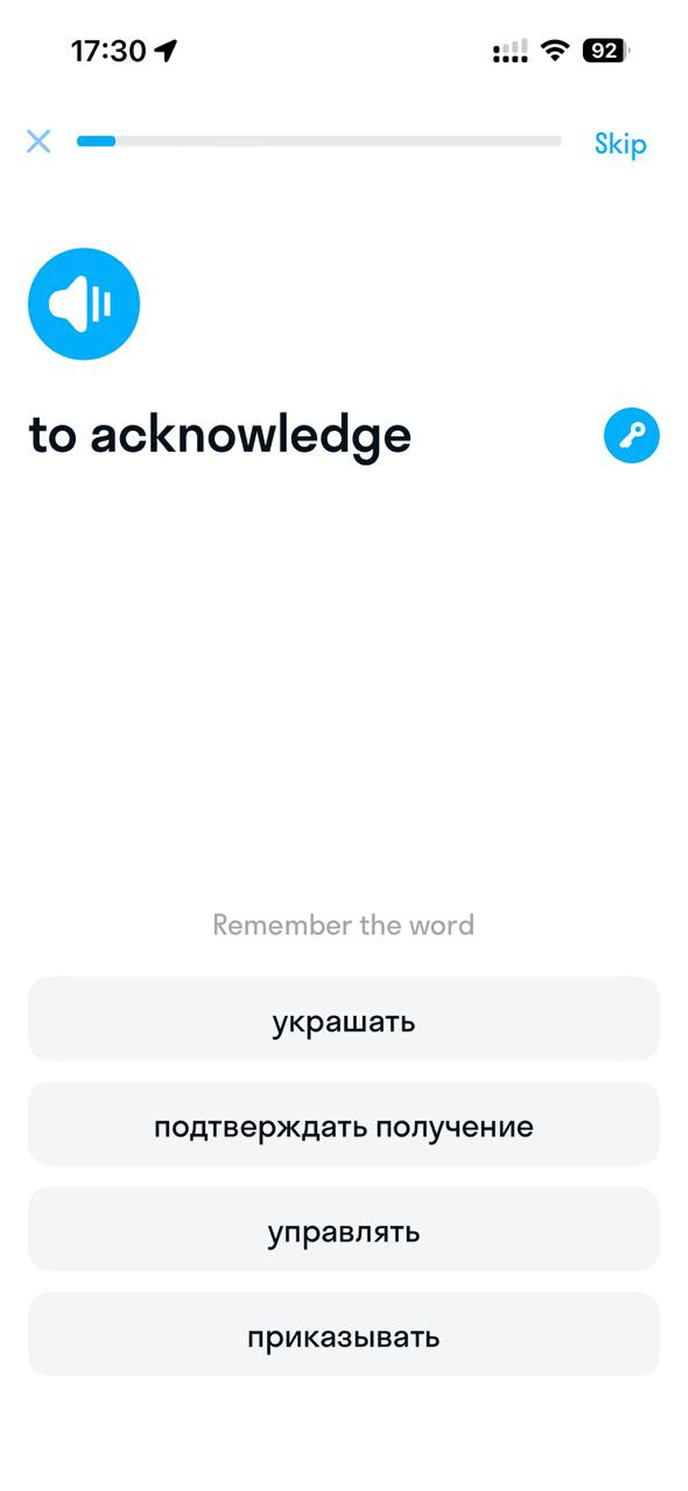
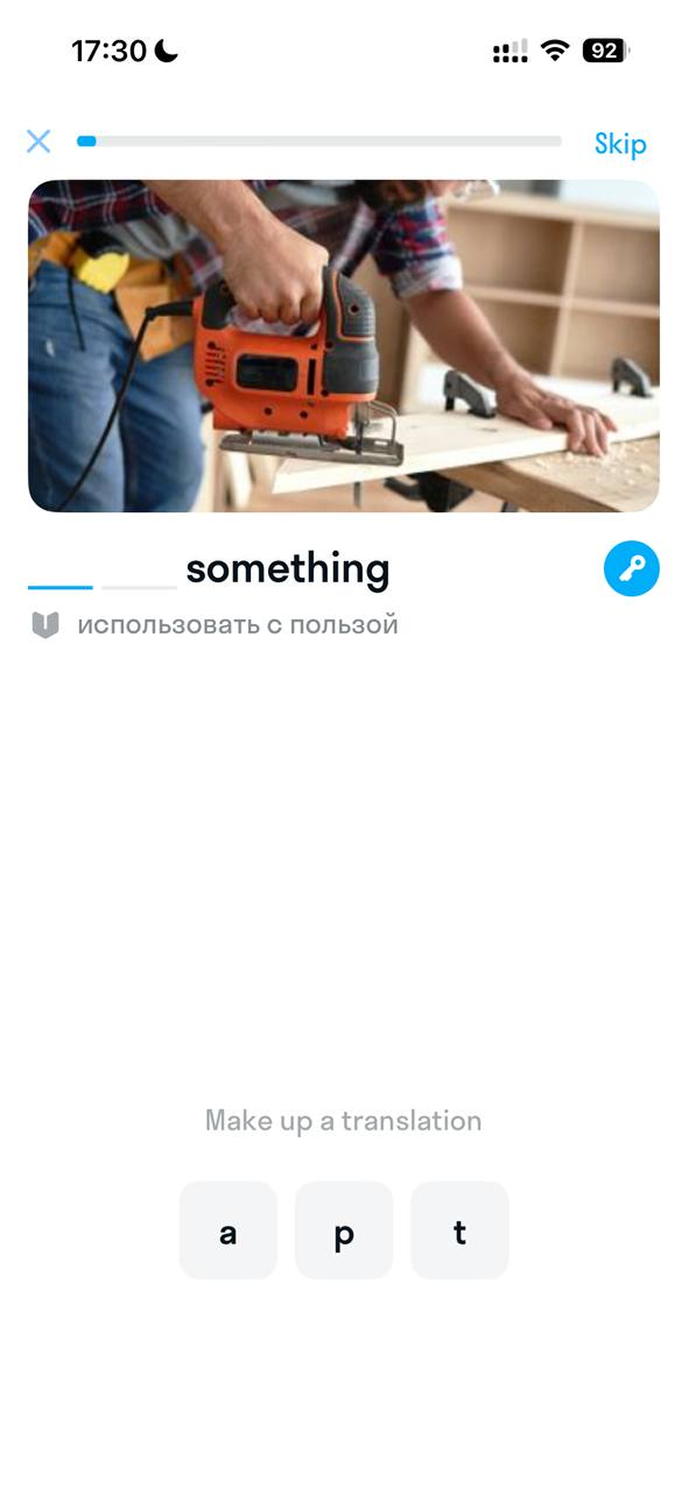
Process
Starting from scratch, I mapped out the core parts of the service and outlined the implementation plan. I started with the training step layout to account for edge cases and get early alignment with the dev team.
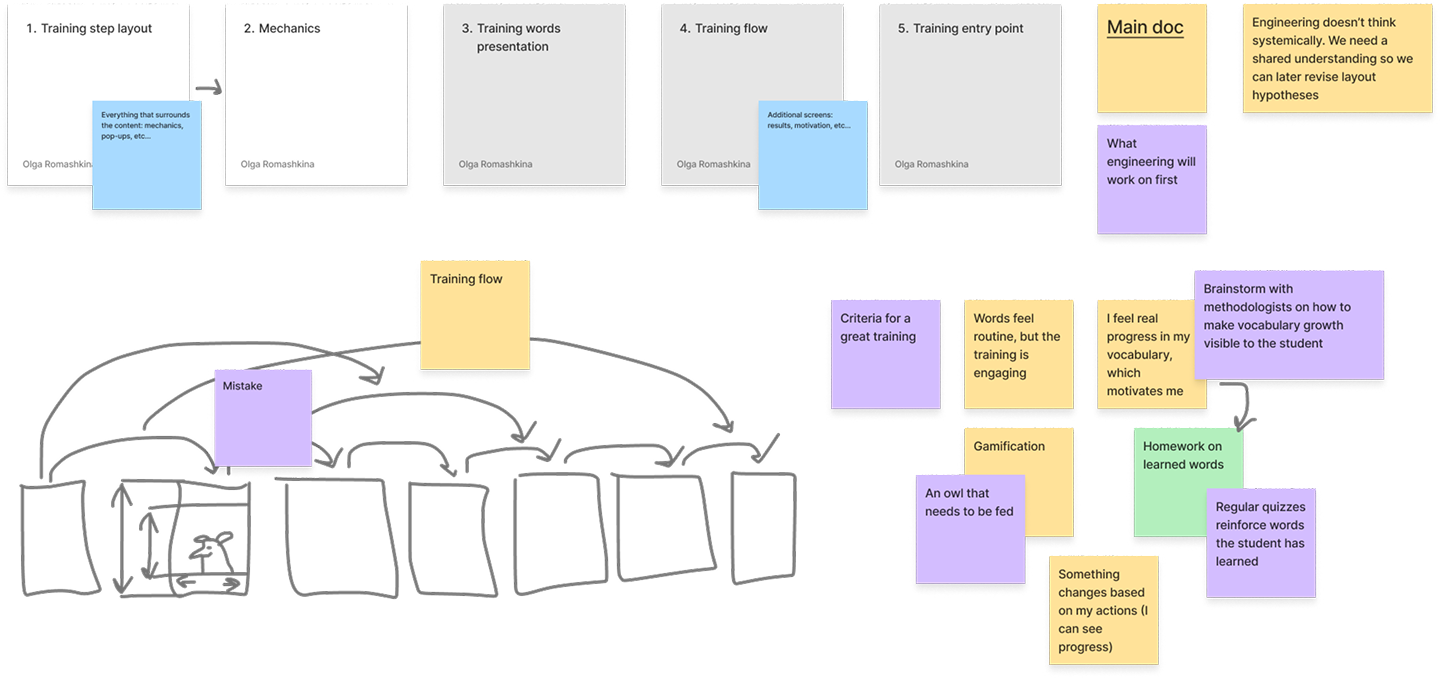
Once the first drafts were ready, I ran usability tests with a UX researcher, fixed key clarity issues, and noted hypotheses for future iterations.
From there, I built out the core learning mechanics: recognition, spelling, listening, and speaking. I specced out states, edge cases, and analytics requirements for the dev team, and kept docs on decision rationale.
I designed for iOS, web, and Android, keeping things consistent across all three.
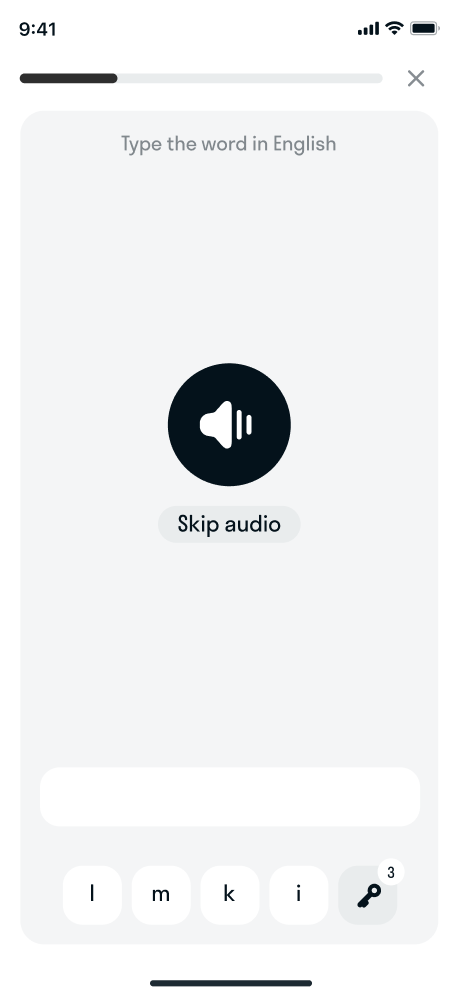
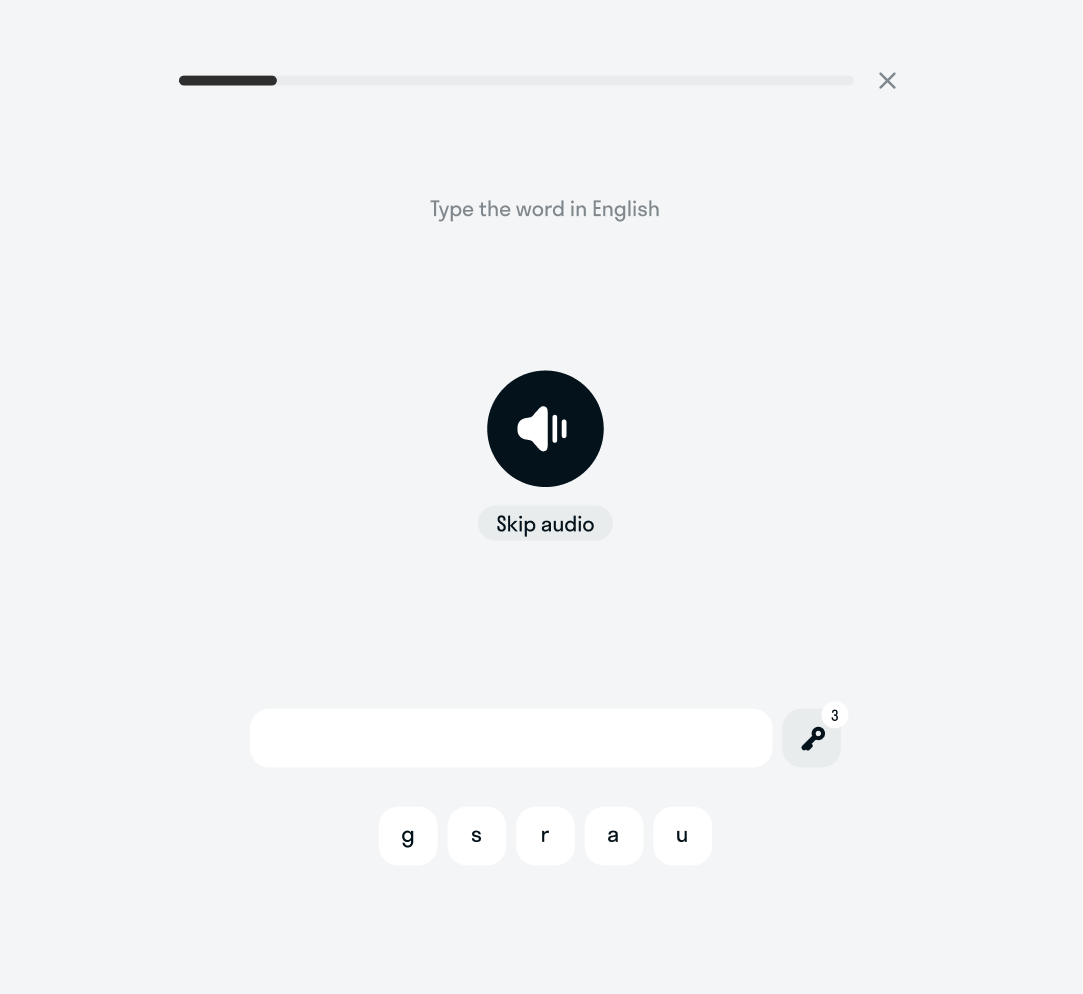
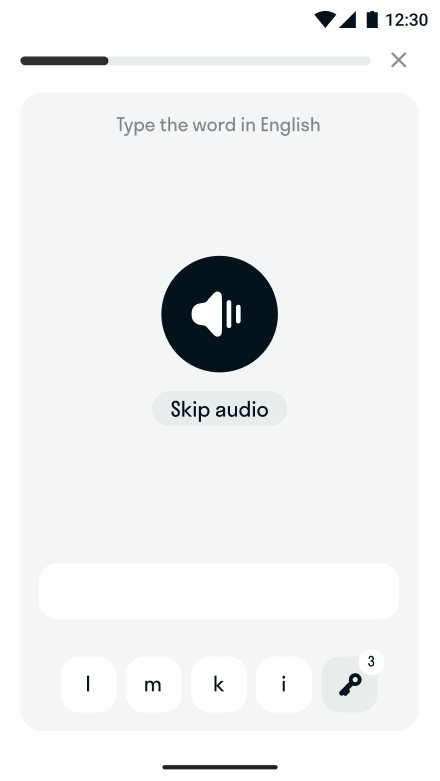
Next came gamification. We added positive feedback after every five correct answers, end-of-session stats to make progress visible, and daily streaks to encourage consistent practice.
The final solution was an 18-step session where students practice 9 words through different mechanics with increasing difficulty. It ends with progress stats and a quick option to start the next session, creating a seamless learning flow.
Impact
The results took some iteration. Early on, the new version lagged behind the old one. We interviewed inactive users of the new version to validate our hypotheses and prioritize improvements. Once we implemented the top changes, daily retention increased by 8 pp and time spent by 14% versus the old version, hitting our initial goal.
The key lesson was about ownership. On short notice, I covered the product manager role for three months and kept the work moving.