
TripleTen Learning Platform
Nebius Group • Senior Product Designer • Mar 2024 — Mar 2026
TripleTen, named by Fortune the best tech bootcamp in the US, helps people transition into IT careers. At its core is a learning platform with over 20K monthly active learners.
I owned multiple platform features, including AI-powered ones, and often took on product management responsibilities alongside design.
AI-powered Vector Search
The problem was simple: the platform had a lot of content but no search. So students struggled to find what they needed, and the support team ended up helping them find lessons instead of solving real issues.
On the process side, there was no product manager on this, so I took it on. I defined the vision, worked closely with engineers on the technical approach, validated it through UX research, set up analytics, and iterated based on data and feedback.
The final solution was an AI-powered vector search with contextual snippets, highlighted terms, and clear source locations. After launching it to 20% of students, I tracked usage in PostHog and kept improving, cutting empty search results from 33% to 13% by tweaking search tolerance.
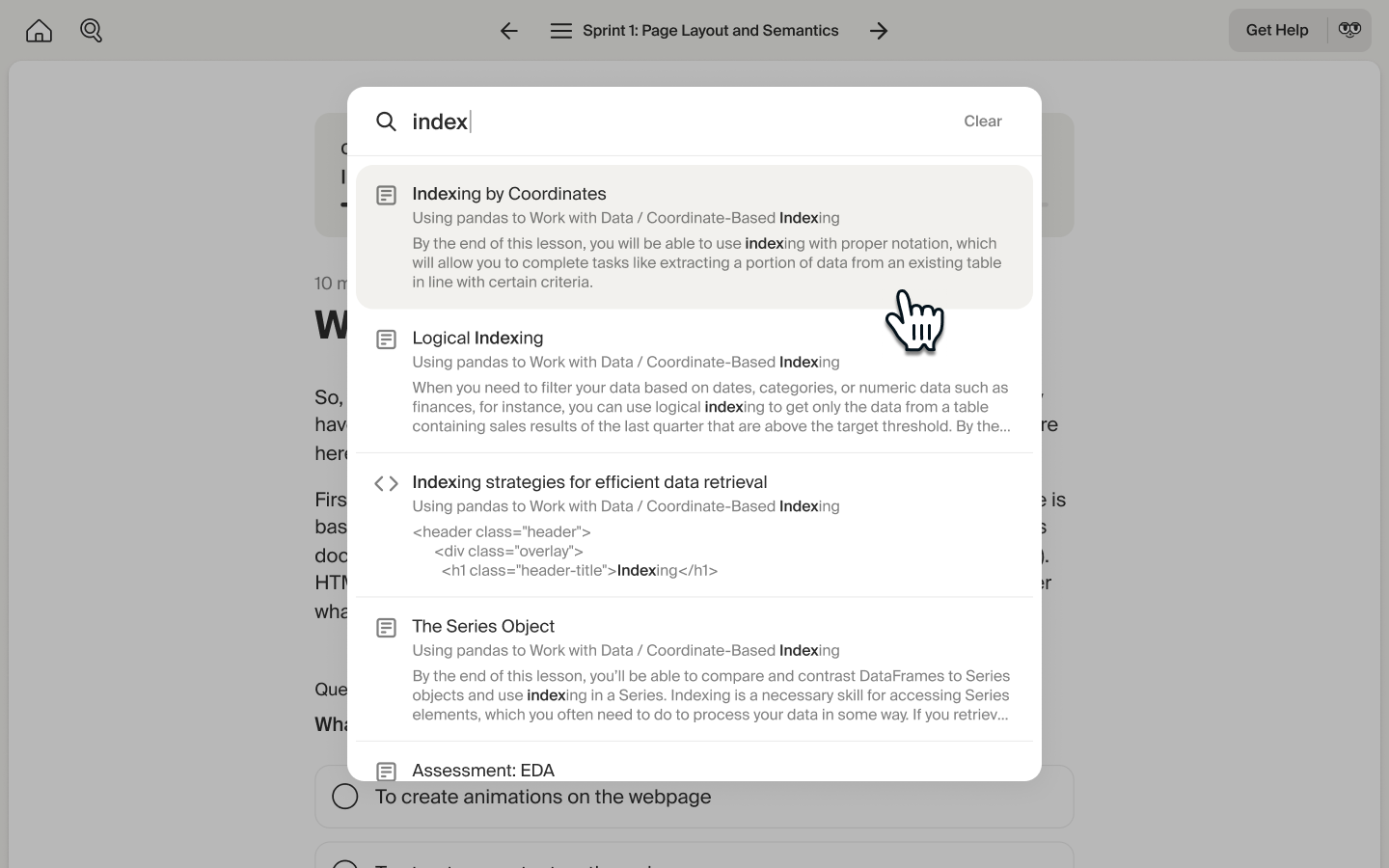
The results: 75% lesson open rate, 85% satisfaction rate, high top-result relevance, and support tickets about finding lessons dropped to zero.

Love the new search feature! Makes it easier to pinpoint lessons already covered for refreshers! Thanks guys!
The data also confirmed things we'd been sensing elsewhere. Students searched by sprints and platform sections, pointing to navigation gaps. Many searched for tutors and career coaches too, which made the case for a dedicated help entry point.
The key lesson wasn’t about search. What started as a focused feature ended up surfacing system-level UX issues.
Help Entry Point
The problem was that TripleTen has multiple support roles, but students don't really know who does what. They reach out somewhere, hope for the best, and usually get redirected. Support teams end up rerouting instead of helping.
As for the process, I started by reviewing support roles and student feedback, then came up with a single help entry point to give students one clear way to get help. I proposed it to the team and led the feature from the product side.
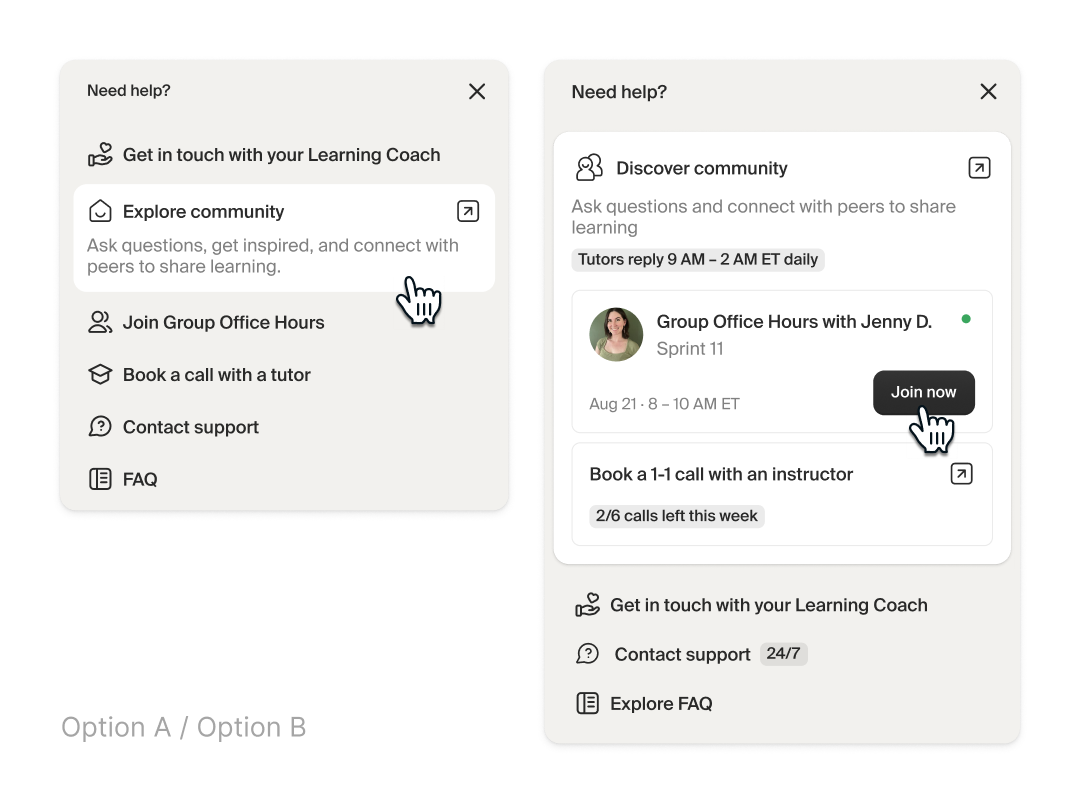
I tested two concepts. Students liked both, but in different ways: option A was clearer and easier to follow, while option B felt warmer and more fun to look at.

I love it. It keeps me from spending valuable time searching for something I need right then.
The final solution combined both concepts: the clarity and structure of option A with the human touch of instructor photos in option B.
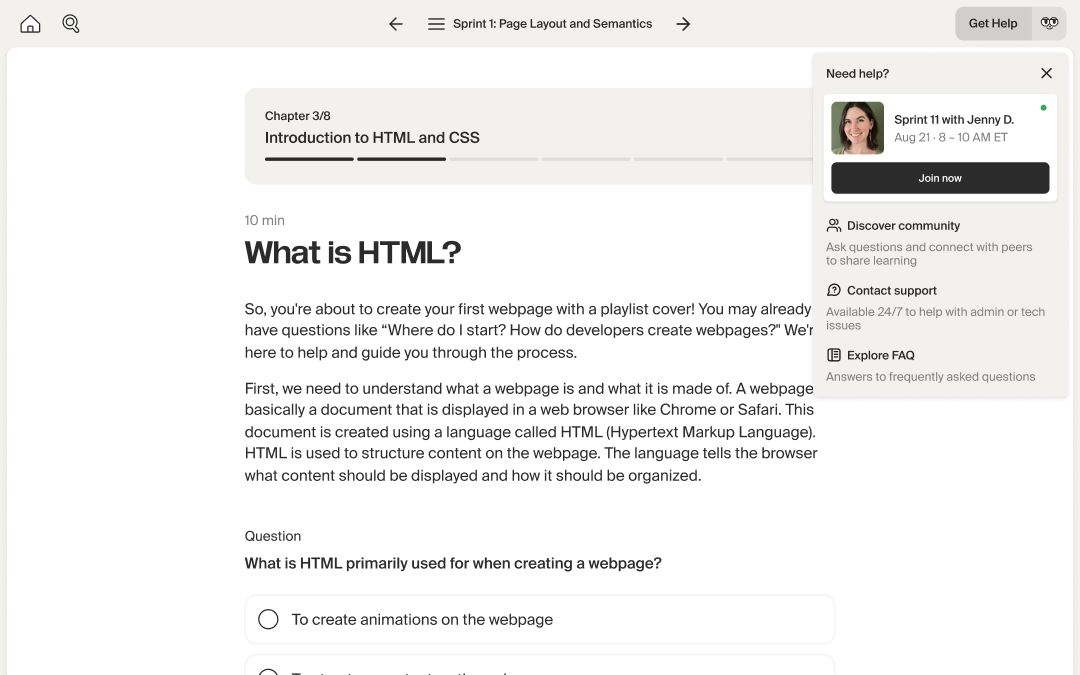
We never got results to measure. The solution was ready to ship, but shifting priorities put it on hold before launch.
The key lesson was about acceptance. Not every good solution gets shipped, but you still learn something in the process.
AI Reviewer
The problem lived in the core learning loop: project reviews were slow and expensive. They relied on manual instructor feedback, took hours and left students waiting and losing momentum.
As for the process, I initially planned a hybrid approach, where AI would suggest issues and an instructor would approve them. But that wouldn’t save much time, since instructors would still need to verify everything. So in the first iteration, I let AI handle the initial review independently and left all follow-ups to instructors.
The final solution was to use Dot, TripleTen’s AI tutor, as the reviewer and automatically assign it the first iteration. We rolled it out gradually, expanding coverage as AI quality met our benchmarks.
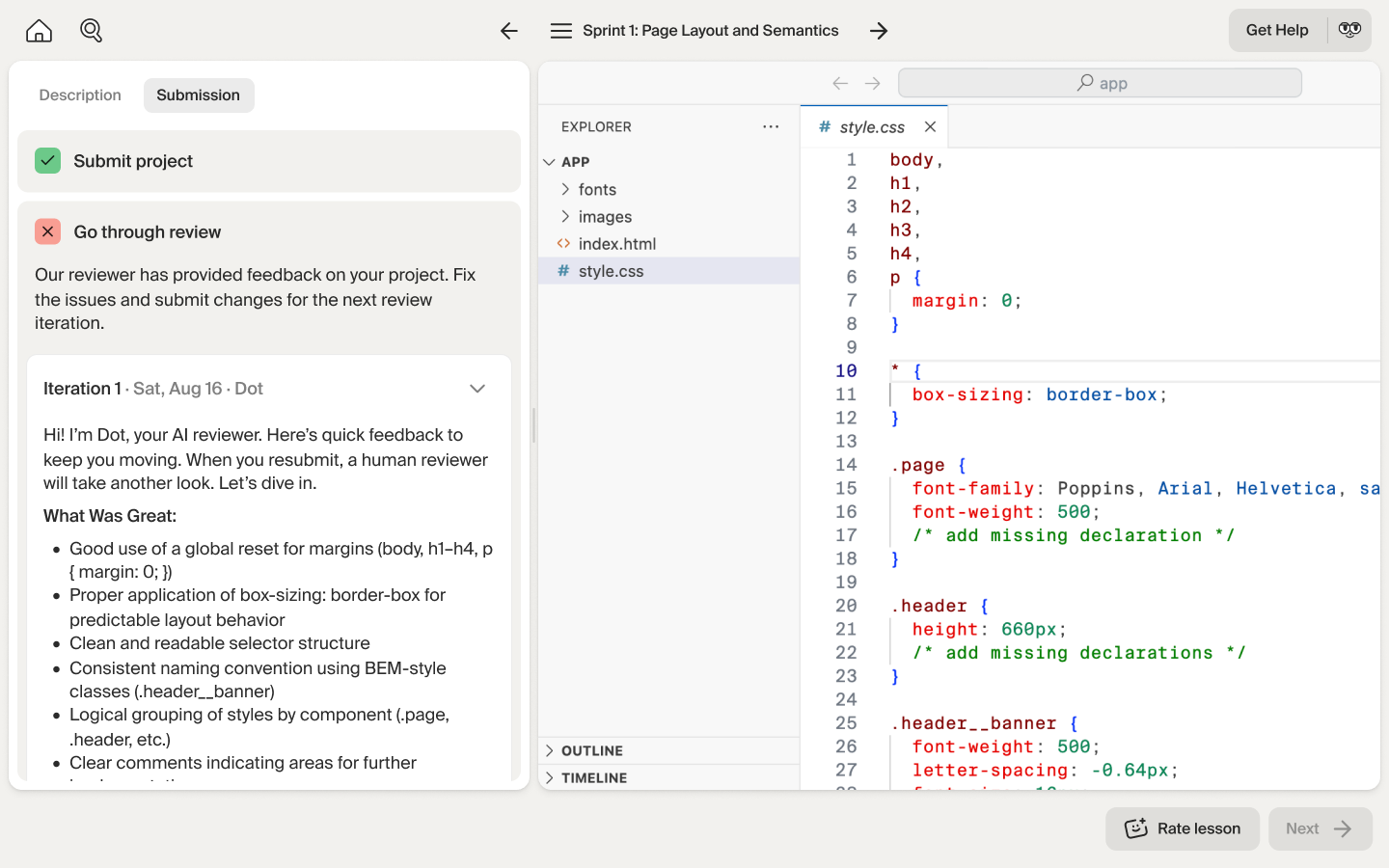
The results: instructor time dropped by 20%, costs went down, and student wait time for the first iteration fell from 20 hours to 2 minutes, with a 90% satisfaction rate.

I liked that it was very quick to get back some feedback on my project.
I explored ways to evolve the tool into a multi-iteration system and planned further development once accuracy reached 80%, but company priorities shifted and it went on hold.
The key lesson here was how quickly a true MVP can prove its worth. Even though company priorities later shifted, the feature is still in use, and it made me trust the MVP approach even more.
Up Next